
How Old is Old Enough?
And a giveaway of FAMISHED by Anna Rollins

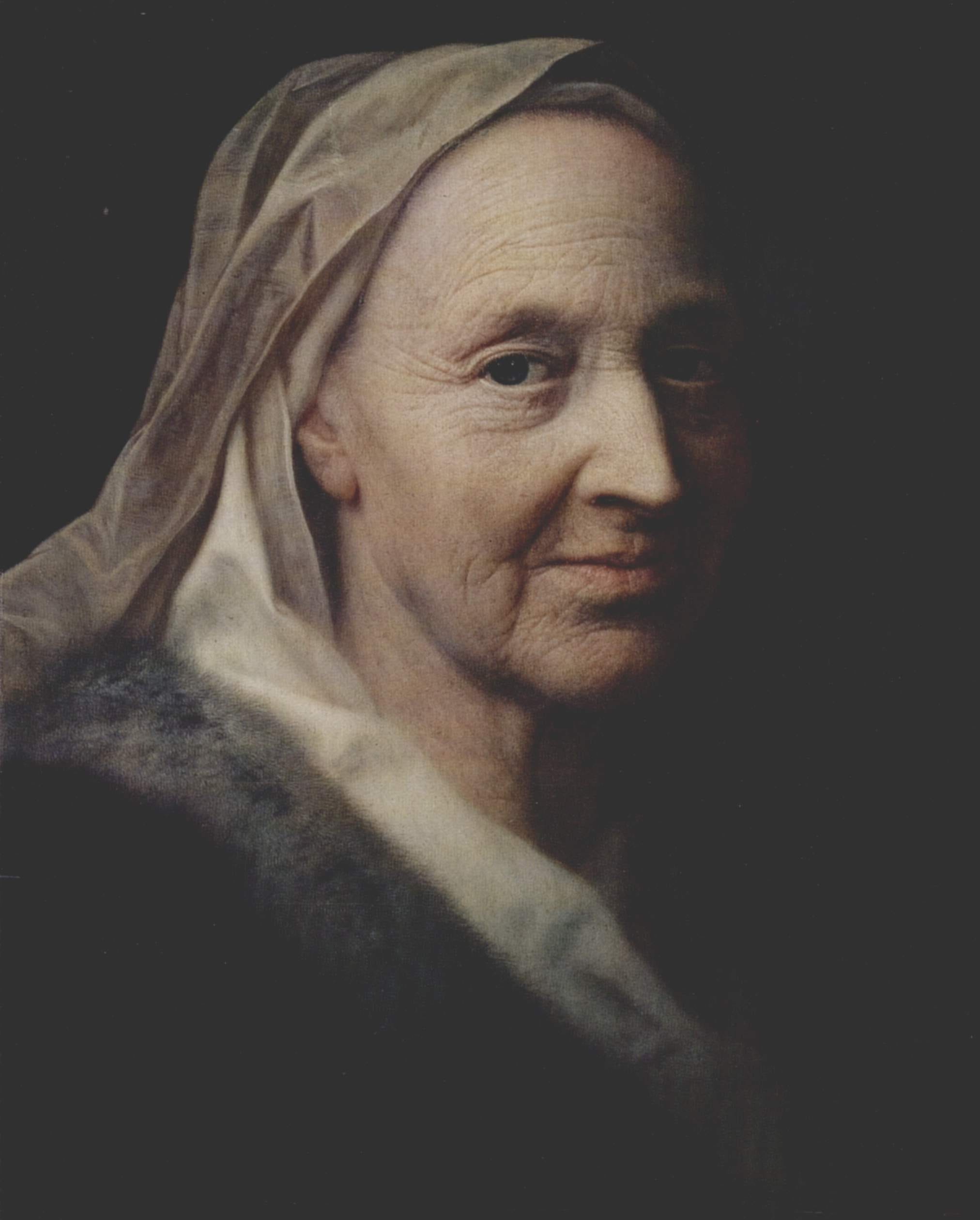
How old is old enough?
I turned 61 this year.
Apparently, it’s not old enough.
It’s not old enough to not have my appearance, body, and clothes commented on by men on the internet, total strangers.
No one should be commenting on the bodies of anyone (to be clear), but what kind of men comment on the bodies of women old enough to be their mothers? Old enough to be grandmothers?
It’s shameful and embarrassing.
Not for me, but for these men and the men for whom they are performing, the men they are baiting, and whose favor they curry. Here’s a sampling I’ve received in recent weeks:1
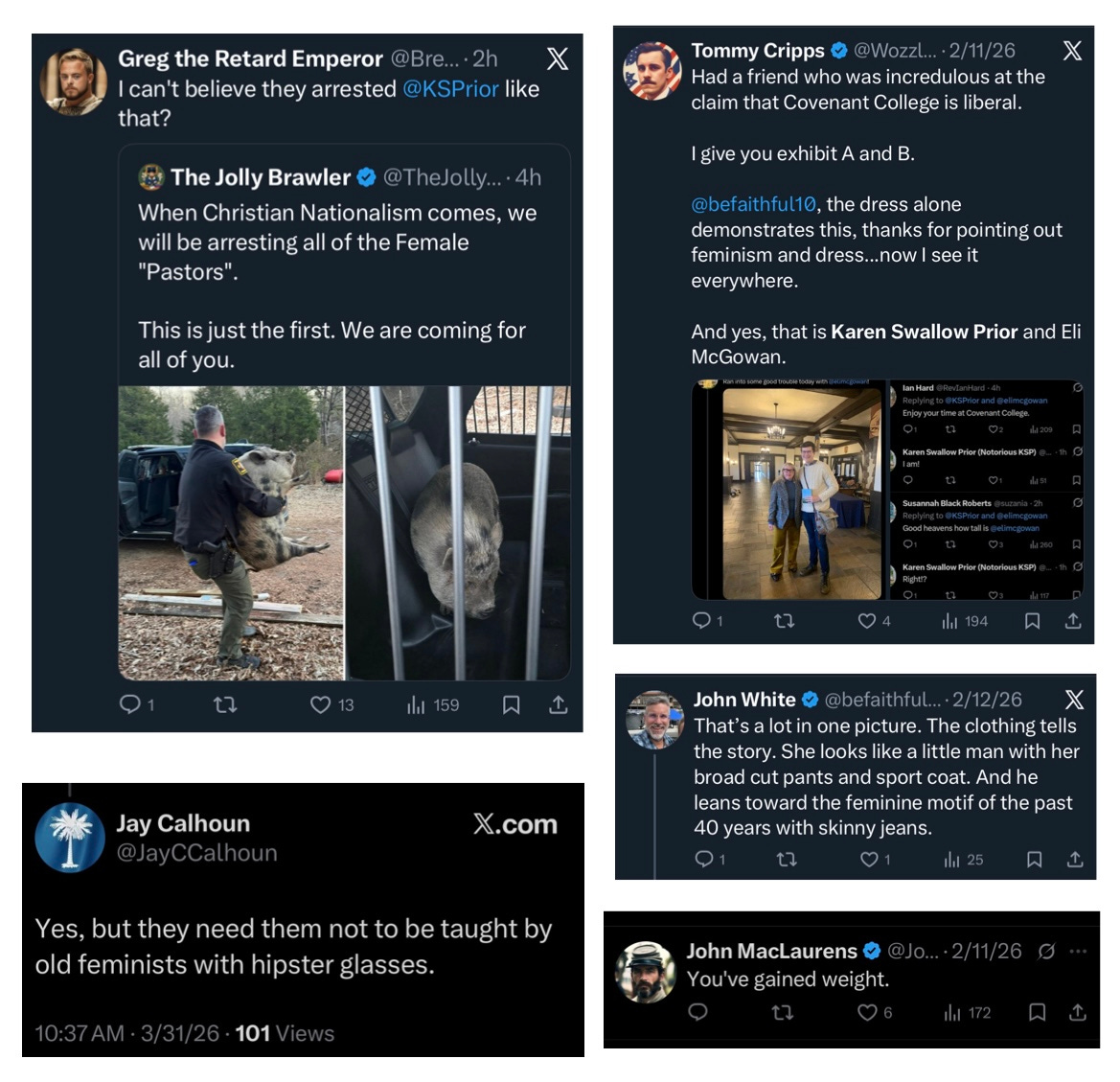
I understand that some of these accounts are anonymous, likely run by cowardly men who have more prominent public profiles, or may even be bot accounts run by victims of human trafficking. Regardless, such comments are made by whomever only because they accomplish whatever it is that those behind the accounts want: traffic, clicks, payment: misogyny sells.2
However, some of the accounts are run by real people using their real names. In fact, someone who commented on one of the threads pictured here is a real person who lives in my community, a young husband and father who has social media connections (at least) with colleagues of mine and a couple of local pastors. Likely, this man’s wife and friends in the community have no idea how he behaves online. They aren’t, after all, their brother’s (or their husband’s) keeper, right?
I had a conversation a while back with a local acquaintance who told me she doesn’t know and doesn’t want to know what her husband—who is a public-facing professional in our community and merely a B-grade troll online, one of the “arrogant, know-it-all Christian” variety—says online. She apparently knows enough to know she doesn’t want to know. But I know. And so do a number of our mutual friends.
It’s interesting that so many men in the church talk about accountability for other things that are done on the internet. But I seldom hear talk about how people are treating other people when their keyboards are their shields—and accountability for that. I wonder what women who would (rightly) feel betrayed if they found their husbands using porn online would feel if they knew their husbands are making degrading comments about other women’s bodies on the internet?
But I digress. This is about these men themselves.
In recent weeks and months, as more has been revealed about the powerful people who enabled and possibly participated in the sexual abuse and trafficking of young women and girls by Jeffrey Epstein, we’ve gained a horrifying understanding of the interconnectedness of those who have cultivated and promoted what I’m going to call the pedophile aesthetic.
This pedophile aesthetic reigned highest, perhaps, in the 1990s and early 2000s when the fashion industry peddled clothing to girls and young women that would really only fit stick-straight, non-curvy bodies: belly-baring jeans, thong underwear, and spaghetti strap tank tops.
I am thankful I came of age long before the reign of the pedophile aesthetic. Nevertheless, I am aging in its shadow.
Various essays in the wake of these revelations discuss the connections between Epstein and his associates whose businesses trafficked in clothing, pageants, and sexualized images of girls, including Lex Wexner of Victoria’s Secret, Donald Trump of the Miss Universe Organization, Abercrombie & Fitch founder Mike Jeffries, and French model scout Jean-Luc Brunel. The photos included in these essays, particularly the personal ones, are shocking both on their own merit and in how normalized they are.
In “Pretty Babies: Exploring Epstein & The Beauty Industry,” Cricket Guest examines the role of these “predatory elite networks of men in shaping not only systems of exploitation, but also the commercial and aesthetic industries that structured many” of the “formative experiences” of young women in the 1990s and early 2000s. As a result, Guest writes, “many women have begun reflecting on the unsettling reality that elements of our self-image were shaped within cultural environments [that] have been dictated by sexual predators and pedophiles.”
Tara Tyrrell calls this enterprise “The Mass Grooming of Gen Y,” which resulted in a whole generation in which “entire girlhoods were shaped by pedophiles.” While some parents did their best to fight it, as Katelyn Beaty recounts, resistance made it harder for girls to fit in (pun intended), creating a different set of difficulties growing up in this culture.
I remember, as a Gen X-er, watching these girls and young women in clothes designed for celebrities and runway models with personal trainers and private chefs and being thankful for the heavy metal/punk rock aesthetic of my youth, a style easily adapted to any kind of body and any level of modesty.
But now, like so many others, I see something much more sinister than mere style or even just profit behind the push to mold young (and old!) women into the forms of pre-pubescent girls.
When I moved to the Bible belt decades ago, I experienced culture shock in a number of ways. One of these was in discovering the deep connections between local churches, church members, and even church staff members to beauty pageants. It was actually shocking. At first, I tried to understand this as charitably as I could, telling myself it was a cultural thing. But now, I can no longer interpret charitably this institutionalized, systematized, and monetized mass grooming of girls and women that trains them to put their bodies on display to literally be judged. (I don’t care how much “scholarship” money they get for doing so.)
I urge you to watch the video clip in this news story that shows a room full of adults coolly assessing a bunch of teen models wearing scant dress. One of those judges is Donald Trump. I no longer find the love of so many “Christians” for Trump confusing.
The connection has been there all along.
POSTSCRIPT:
Of course, another wildly distorted aesthetic dominates celebrity culture and MAGA politics today, one called Mar-A-Lago Face, consisting of sculpted, Botox-filled faces, and permanent duck lips—often with bodies equally blown up and snatched. While this aesthetic exaggerates the curves of womanhood, in a kind of horseshoe effect, it really comes back around to the pedophile aesthetic by mimicking the cartoon characters and anime figures that are so popular among youth and by denying the realities of aging on the female body.
And in the interests of total transparency, I do color my hair—and have since my early 20s (in all shades ranging from dark red to platinum blond over the years), use moisturizer (I hate that Epstein ruined that, too, Elizabeth Oldfield!), and enjoy dressing as stylishly as my broken, relentlessly plumping body will allow.
Aging gracefully—and that is my aim—will look different from person to person, but it is a desirable good.
My God, eight years ago this month, I was hit by a bus. I’m just grateful to still be here! I am a walking miracle. We all are. Every one of us—a miracle—even those who aren’t, for whatever reason, walking. (For three months, all those years ago, that was me.) If you are alive, you are a miracle.
All those mocking, misogynistic, abusive, predatory, pedophile-protecting men will stand someday before the same God who preserved my life in the body he gave me.
…
POST POST SCRIPT:
I just came across this disgusting post (disturbing on so many levels) about me. Really, such men should be so ashamed. I pray they have people in their lives to answer to:

BOOK NOTE:
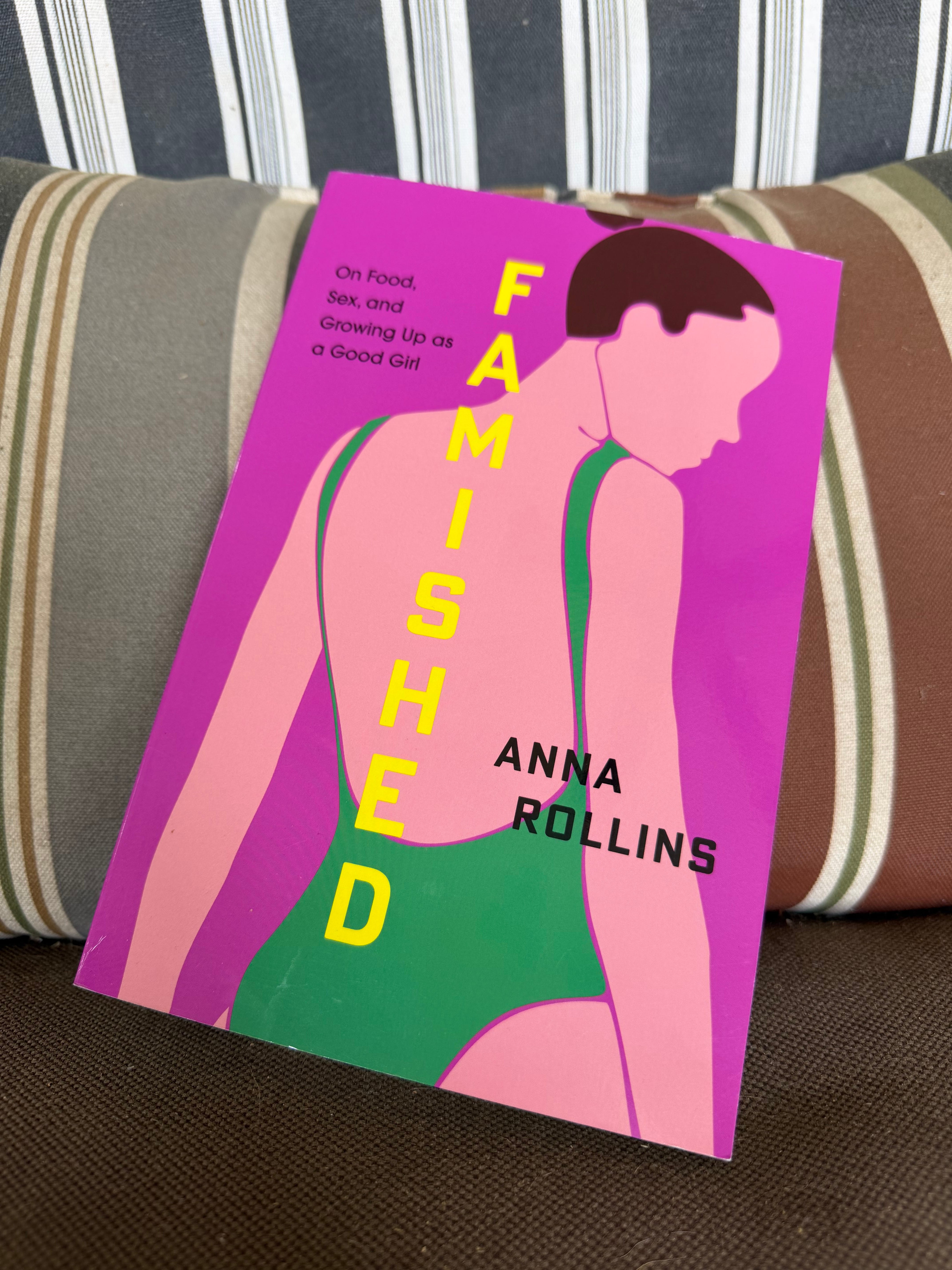
I am thrilled this week to be giving away to one paid subscriber a signed copy of Famished: On Food, Sex, and Growing Up as a Good Girl, by Anna Rollins.
I loved this book. I say that as a reader who did not go through any of the things Anna did. Yet, the person who has not struggled with body image or measuring yourself against impossible beauty standards or ideals about sex, relationships, faith, and life is rare, if such a person even exists. And I loved this book because Anna is an extremely gifted writer and a deeply thoughtful person. The world she lives in and writes about is my world—it is our world—as I hope my reflections above make clear.
Type FAMISHED in the comments and at the end of the week, I will pick a winner to receive a signed copy.
WHAT’S NEXT:
May 19: The Beggar’s Opera Act 1
May 26: Act 2
June 2: Act 3
Starting June 23: Moll Flanders by Daniel Defoe
“Absolutely unmixed attention is prayer.” – Simone Weil3
I know that what I receive is minor compared to the abuse other women are treated to on the internet (and beyond). My mockers come from just one little corner of the internet, one peopled mainly by people who call themselves Christians.
See Dorothy Littell Greco’s book, For the Love of Women: Uprooting and Healing Misogyny in America. It’s a very good and very important book.
Simone Weil, Gravity and Grace, trans. By Emma Crawford and Mario von der Ruhr (London: Routledge, 2002), 117.
In the shadow of the double entendre of this question hides the shame of those who conceal their names and faces to mock age as they infantilise the women around them, yes, even as they grow fat and old without care in their own male bodies.
Dr Nikalya Reize writes about the tendency to get stuck in the archetype of maiden or mother in one's imagination of women, and says that the glorification of the process of turning into the deep-lined face of wisdom has been stunted by such pedophile aestethics as you mention here.
Take heart, if you are our Mother, then all of the benefits of having a thousand, thousand children are yours.
Such vile comments - they'll have to explain those "idle" words before the Throne one day. Their wives may not want to know if they look at porn either; sometimes women are so insecure in themselves, so dependent on their husbands that they cannot face the truth.
Being in ATI meant the fashions of the 1990s and 2000s were mostly irrelevant to me, but we were well aware of the danger of perverts - the mid-1990s trial of one of Canada's most sickening serial killer cases, in which teen girls were the victims, was televised (very controversially), but it made both parents and teens aware of the potential of predators. In our rural community, most teens girls that I remember from the era wore jeans and baggy shirts - sadly, those who dressed more provocatively were often stigmatized. By my late teens in the early 2000s, I mostly wore dark, a-line cut, ankle-length skirts, which I sewed myself, with fashionable blouses and shirts - black was my preferred colour.
Karen, I get the impression from photos that you aren't tall. I am quite short - just a couple inches over 5 foot - and in my late teens and early twenties, I was fairly slim. Although I was mostly oblivious to it at the time, I attracted attention. My mother later said she often noticed men looking after me in the store (she says she saw admiration, rather than leering in their faces). I recall going to my college locker and overhearing a nearby girl tell one of the boys to whom she was talking to stop staring at other girls - since I was the only other female in the area, I knew she must be referring to me.
Now I am middle-aged and my frame is spreading no matter how I eat or how much I exercise. I am not surprised - in build and facial structure, I resemble my materlineal great-grandmother, who was also quite trim when she was younger but became very stout by middle-age. When I see pictures of her in middle-age, I see a strong woman, one who was sent to work as a servant at the age of twelve, who married a wounded and permanently damaged WWI veteran, who held her family together through the Great Depression, who endured the sorrow of losing her two youngest children in infancy and her eldest son in WWII. I am proud to carry her genetics.
Those who disparage the normal human appearance of middle-aged women in comment sections are pathetic cowards who will never know the blessing of having a such a strong woman standing at their side through life.