
Kindness Is Not Optional
My newest essay at The Dispatch

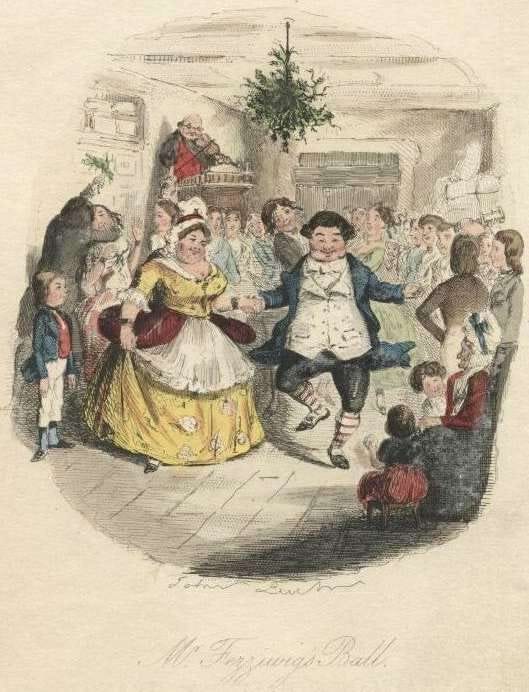
I’ve been thinking a lot about kindness lately—probably because there is such a lack of it in so many places. But kindness has a long history as a virtue in both the classical and the Christian tradition, where it is one of the “heavenly virtues.” I devote an entire chapter to it in my book On Reading Well: Finding the Good Life through Great Books.1
In my essay today at The Dispatch, I discuss this virtue and its opposing vice. Can you guess what vice that is? The answer might surprise you!
Here’s an excerpt of the essay. I hope you will click through this link and read the whole thing. In it, I discuss research on the benefits of kindness, as well as the mind/body connection in history and art, including a shout-out to Charles Dickens. (You may need to get a free subscription to read the whole essay.)
Because kindness is a virtue, it must be tied to other virtues such as justice, courage, and prudence. Moreover, like all virtues, kindness moderates between an extreme of excess and an extreme of deficiency. Kindness is the balance between the vices of contrariness (or quarrelsomeness) and obsequiousness (or flattery). And, like all virtues, kindness has an opposing vice. Some assume the opposite of kindness is cruelty, but there is a longer tradition that, perhaps surprisingly, points to another vice as the one that directly opposes kindness: envy.
While kindness is essentially good will toward another, envy is ill will. Thomas Aquinas defines envy, simply, as “sorrow for another’s good.” While good will leads naturally to acts of kindness, ill will leads easily to cruelty—actions that increase the suffering, rather than the joys, of the object of envy. Envy arises from vainglory, Aquinas observes, and produces “daughters” of its own. Envy leads to gossip and defamation, joy at another’s pain, and pain in another’s joy.
Kindness is rooted in the desire to love one’s neighbor. Envy is rooted in the desire to best one’s neighbor. Envy culminates in hatred. Before Cain murdered his brother Abel, he envied him.
…
Envy consumes.
Kindness generates.
As an Amazon affiliate, I may earn a small commission for qualifying purchases made through this link.
I’m reading Ron Chernow’s excellent biography of Mark Twain (or Sam Clemens). I note many ways in which Twain was kind and even generous although he fully expected a rich return - that he would become a wealthy man. At the same time Twain was a vengeful man, taking offense easily and paying back people who he believed had wronged him. Twain also believed in God, but an absent God who didn’t care about humans, evil, or creation. Privately he railed against God wanting him to do something about the evil in the world. My interpretation is that since God didn’t care, Twain had to take it upon himself to right the wrongs. His tendency toward retribution reminds me very much of our current president. In Habakkuk the prophet assures Israel that in the end God will see that justice is done. But there is no promise as to how soon in human time that will be. Kindness takes faith in that promise and patience to wait for God’s fulfillment. - Jack
This is timely for me. I am leading a community of practice at my college this semester on the book Pedagogy of Kindness. I am excited to read the book and discuss it with others.